social text* is a collective reading practice curated with juliette yasmine mello.
social text* is a way of gathering around texts through reading and conversations. It’s a collective practice that aims to facilitate reading as a pleasurable process, moving from conversational modalities towards experimental modes of poetry-making.
social text* is an offering inspired by Fred Moten’s work. Fred Moten talks about opening up the space of study into playful togetherness. He also talks about text as a social space. social text* takes up his proposal and imagines a space where the texts can hang out, inviting the readers to become witnesses of these relationships, seeing textual conversations emerge and lending ourselves to the books’ social life.
In some iterations, participants are invited to bring their own books, with a particular focus on texts that feel dense, resistant, or difficult. These materials are approached through a cyclical structure that alternates aleatory reading, collective discussion and, sometimes, writing exercises. This movement allows fragments to circulate across voices and contexts, producing temporary constellations of meaning. In this sense, texts are treated as social fields that can be entered from multiple points, recomposed, and reactivated collectively.
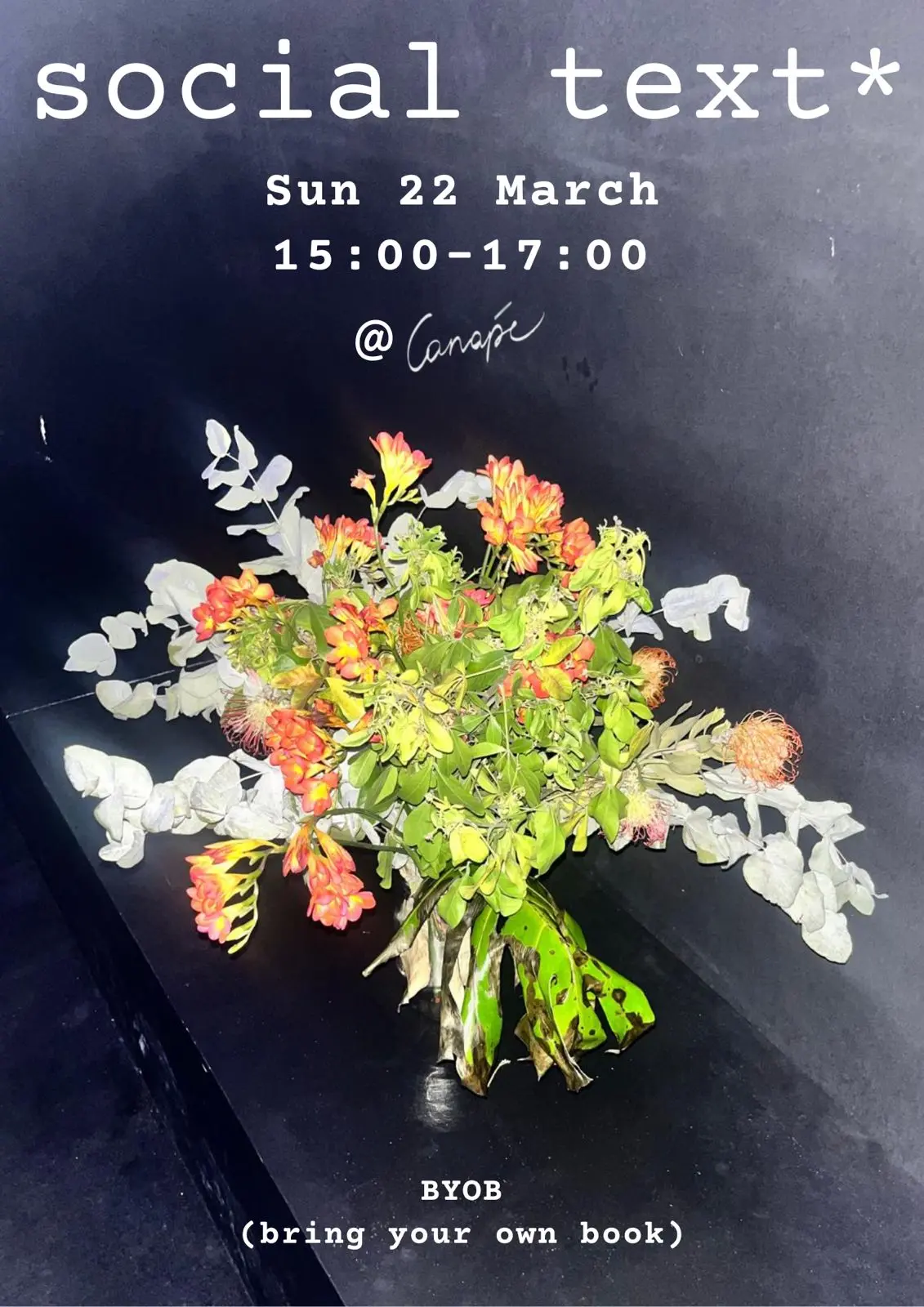
social text* was hosted at rile*books, Canapé, Unity Bookshop, and One Filed Fallow.
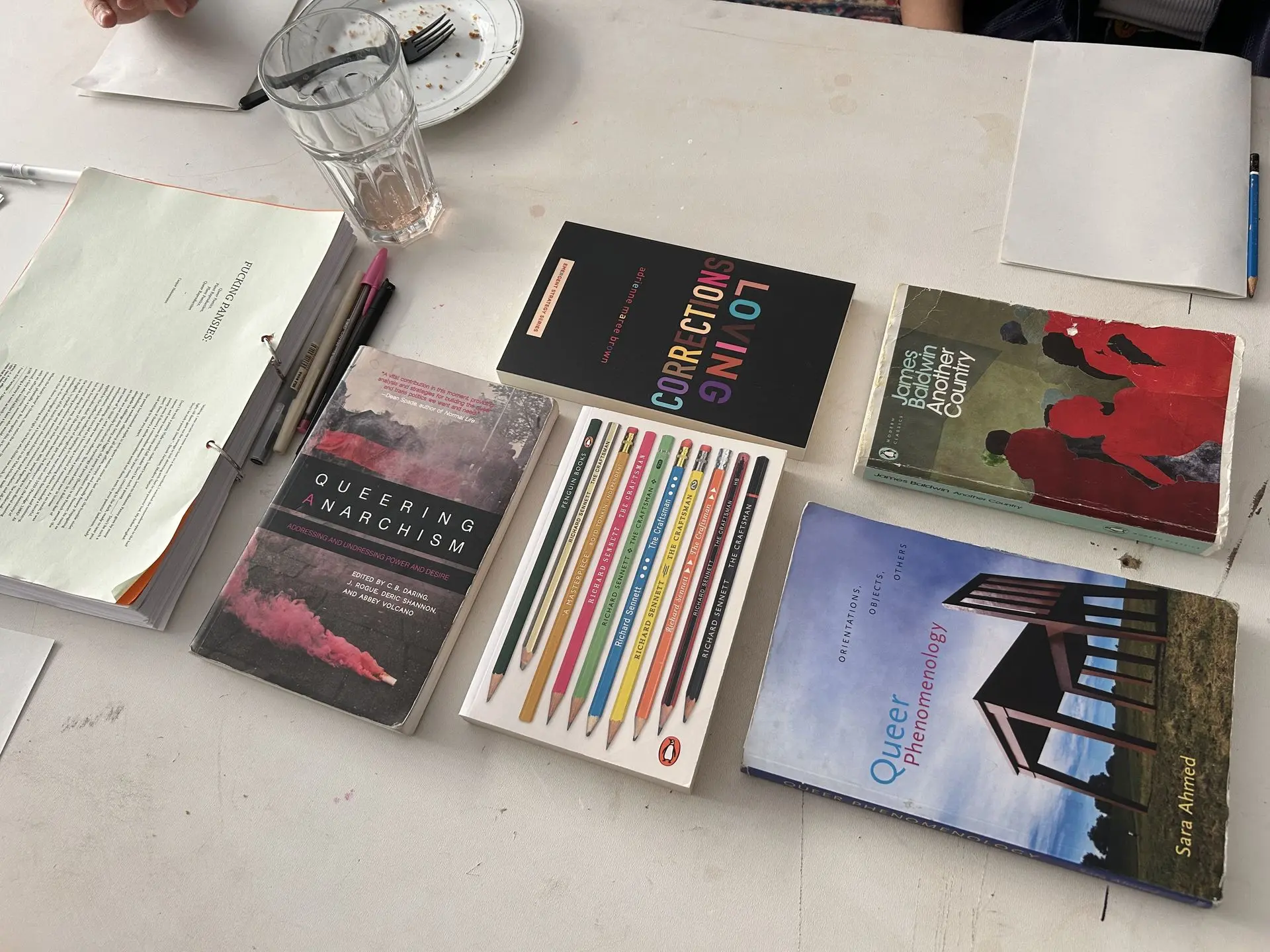
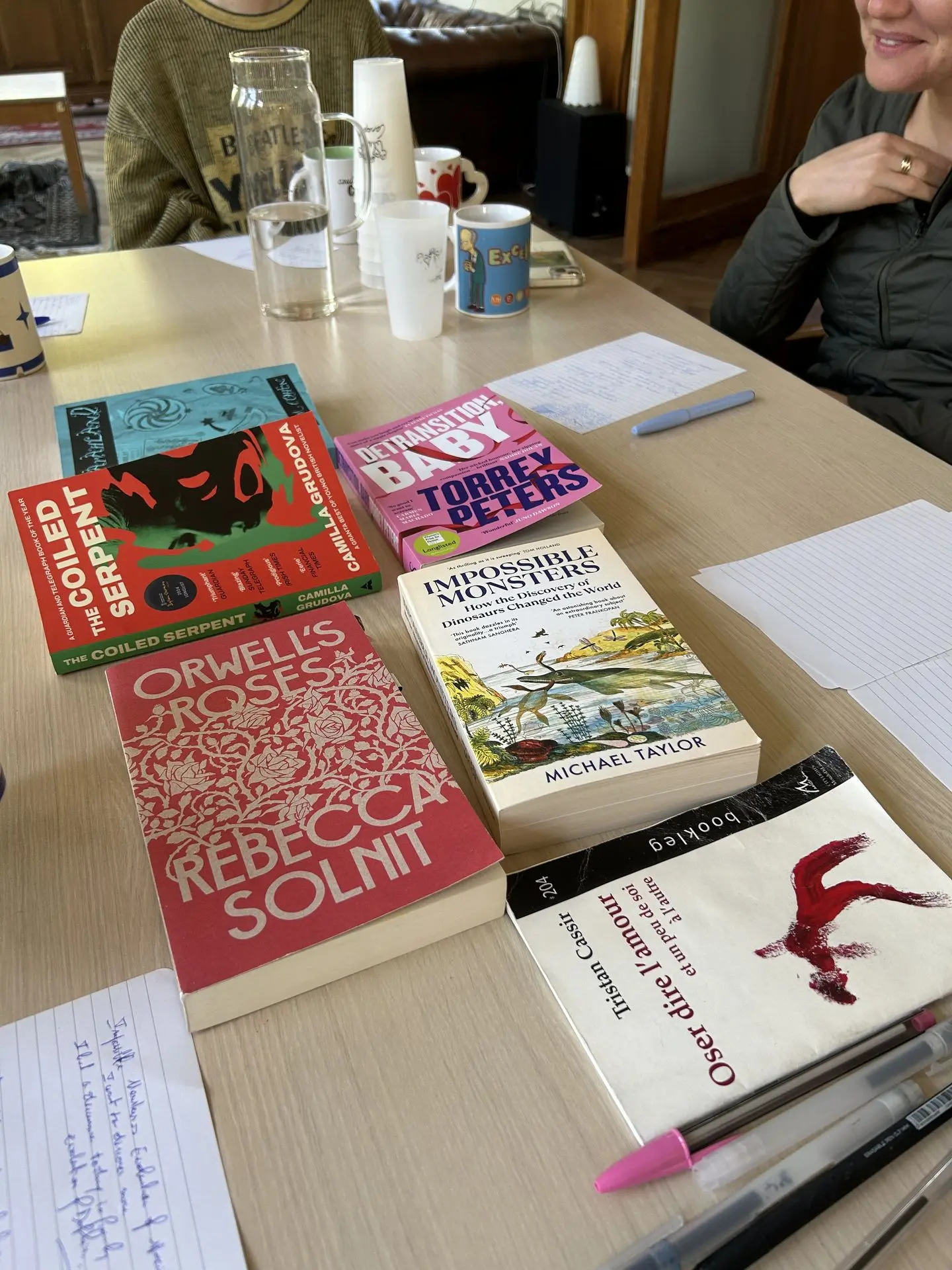
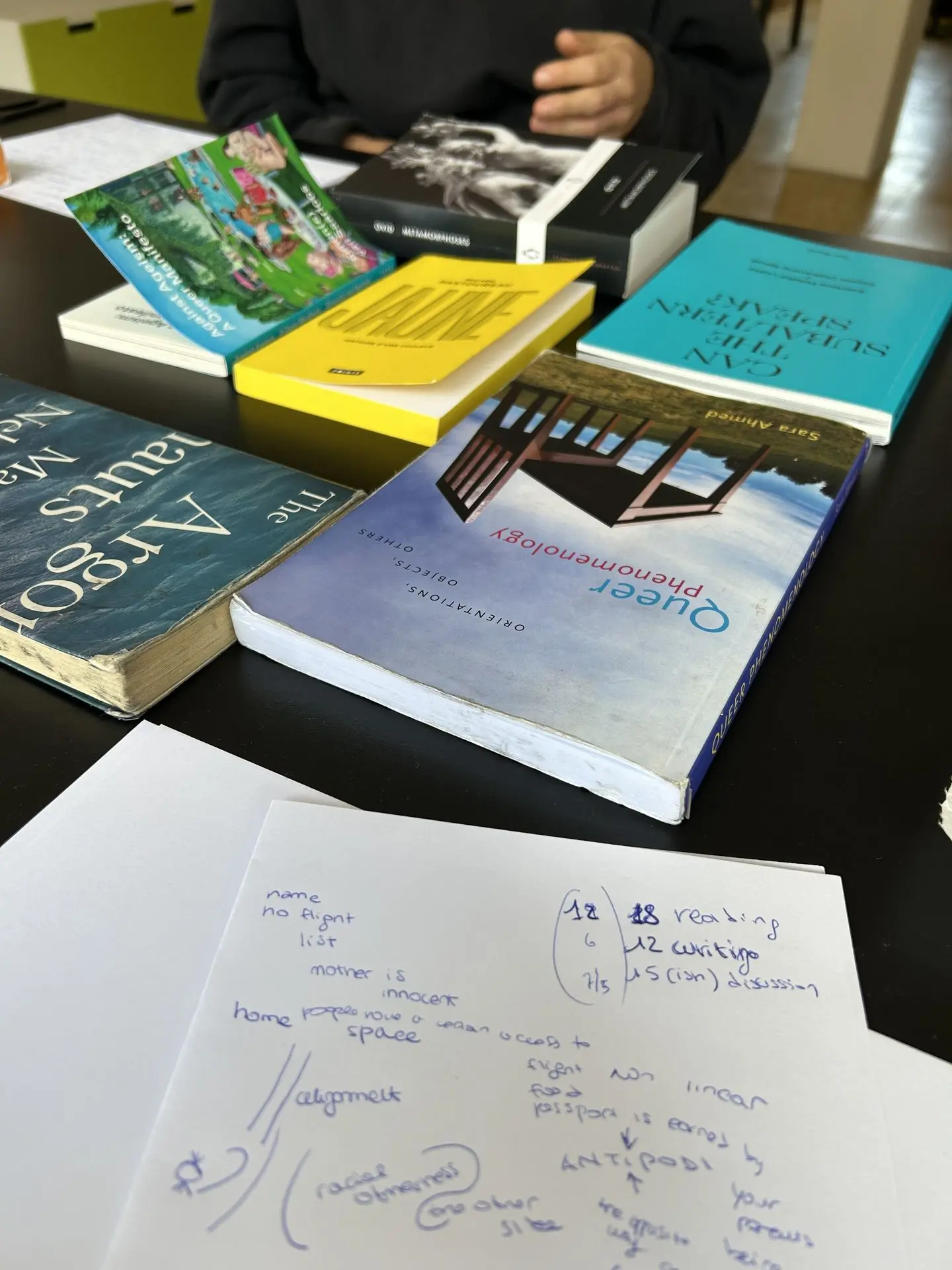
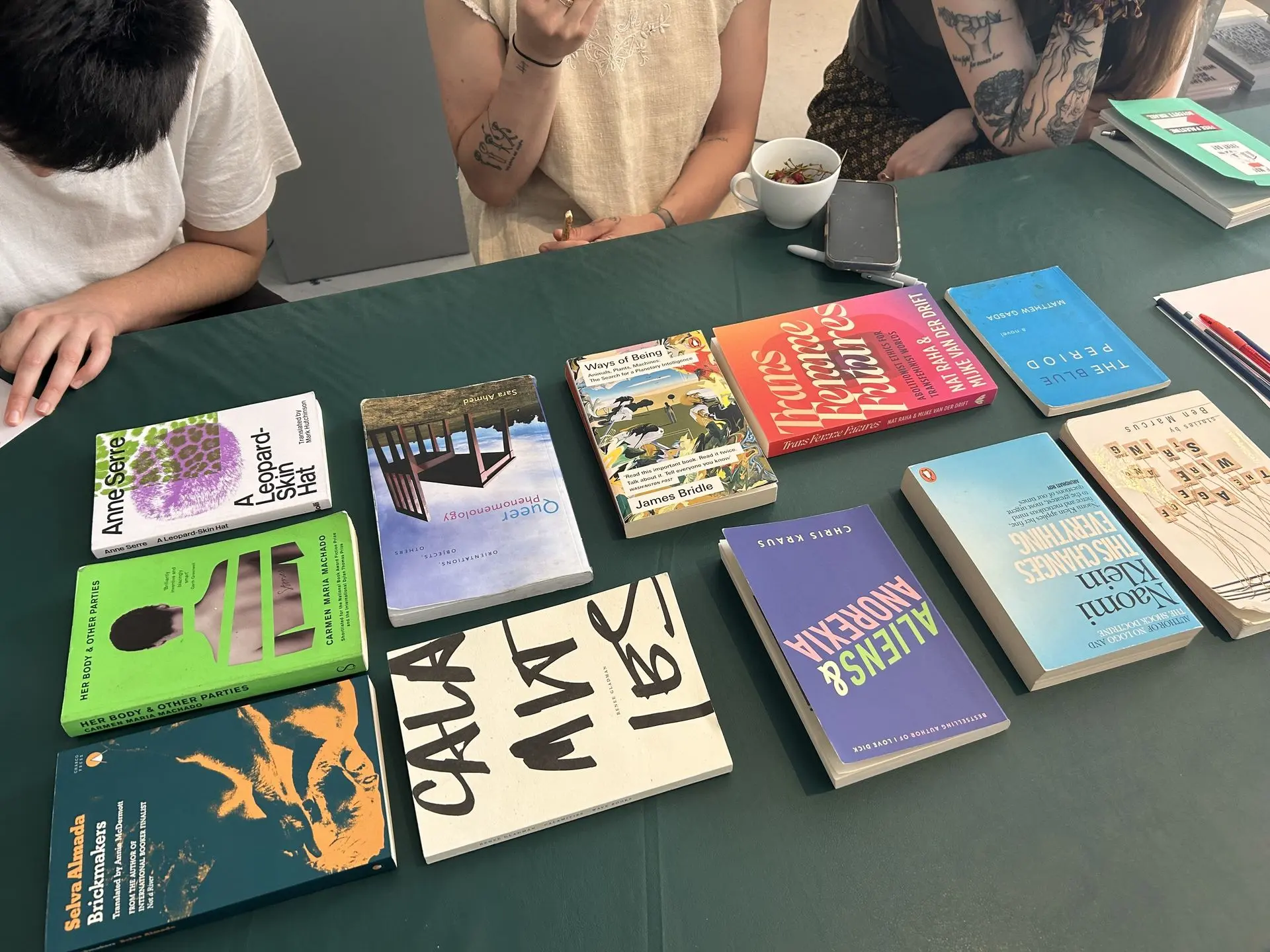
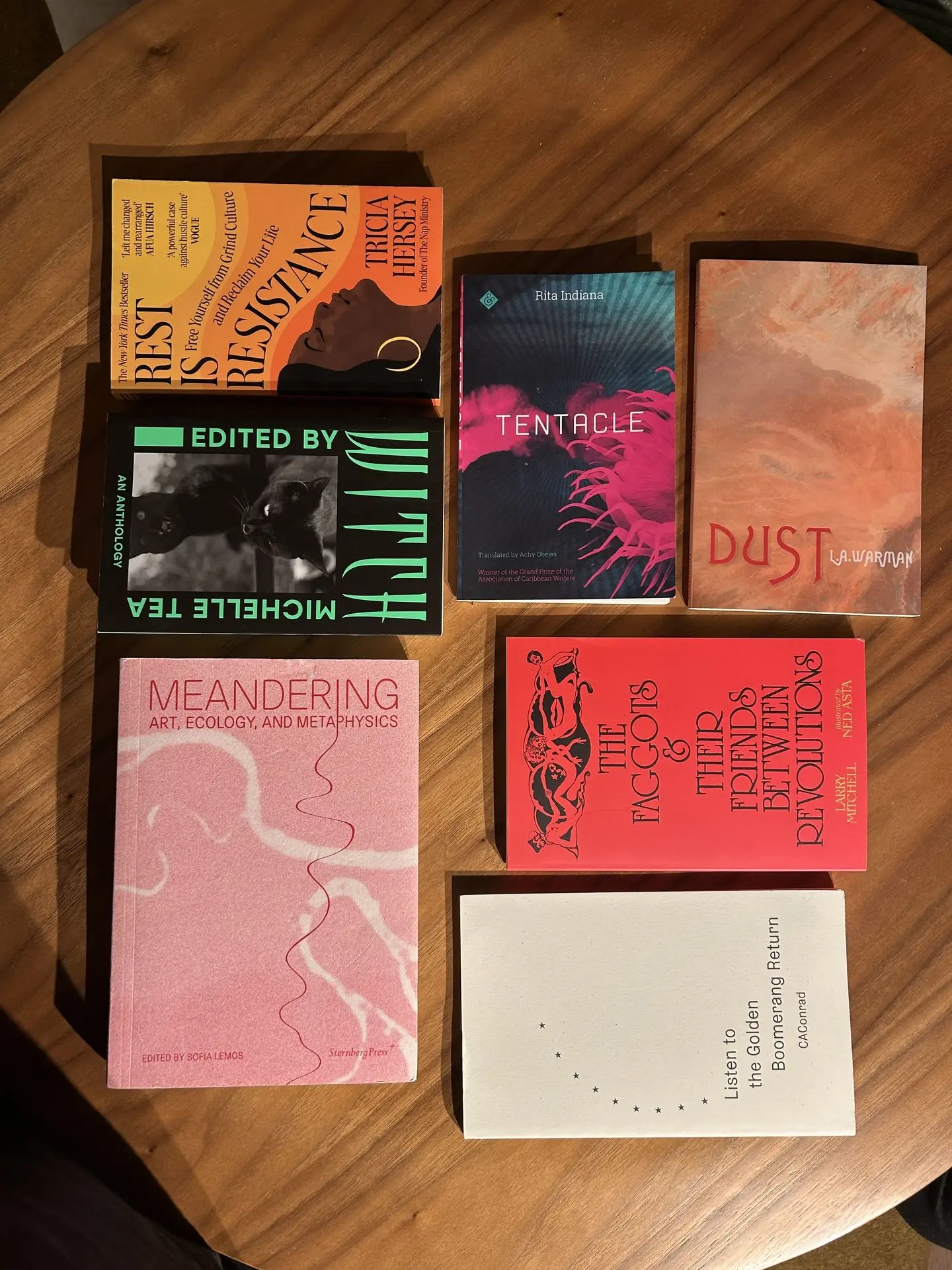
A central aspect of social text* is the desire to shift how we read theory. Many such texts carry an aura of inaccessibility that can limit engagement. Multiple methodologies, such as arpentage, aim to bridge that gap; social text* moves with the same intention, across a multiplicity of sources. Working with excerpts and discontinuous reading, participants can engage directly and form their own pathways through the material. Instead of relying on prior expertise, they are invited to focus on rhythm, specific words, tone of voice, and evoked imagery.
social text* transforms theory into a poetic collage, allowing us to drift away from the expected continuity and from analytical approaches. Through shared exploration and redistribution of authorship, reading turns into a generative process that invites curiosity, play, and unexpected forms of understanding.