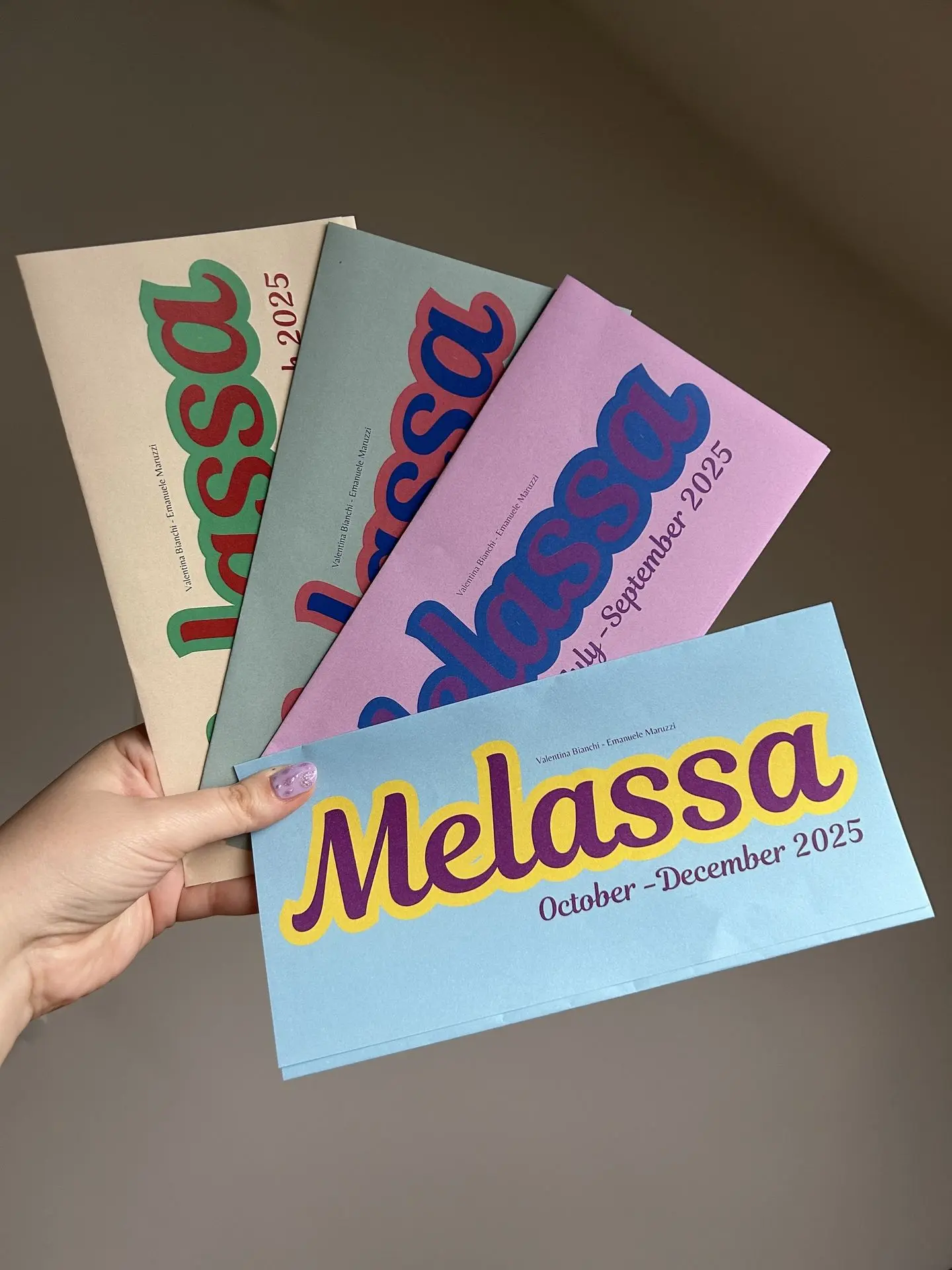
Melassa is a series of four zines, one per season, narrating the legends and paradoxical realities of the margins. The province is a specific ecosystem full of contradictions and unexpected anachronisms. In the province—as in all border lands—time functions differently than it does in the centers of civilization. Melassa lives in a dilated, thicker, and murkier time zone, performing a bygone spiritual connection to nature while desperately grasping the accelerated time of modernity and contemporaneity. In this confused mass, past and future merge in a disorienting chaos.
With an aesthetic inspired by popular almanacs, Melassa becomes an anthology of personal stories and local legends, highlighting self-colonial narratives. Every issue of Melassa focuses on a specific aspect of the life in the province, recounting them with playful skepticism.
a product of the last two centuries, but it acts like it is timeless. Melassa is a place that feels like home and the most remote location at the same time. It’s an impenetrable fluid wall that keeps you warm and comfortable enough for you not to question your forced presence in it. Its thickness makes your every movement painfully slow. Immersed in it, you run like in your dreams. A different temporality reigns in Melassa: everything around you seems to have always been there, lacking any preserved origin.
place, Melassa takes time. It takes the time. It dilates it and makes it into a miniature railway where both the departure station and the arrival station can be seen at once. It becomes easy, then, to travel back and forth in the blink of an eye. You will be confused: what seems new, recent here, the fruits of “progress”, are outdated for the rest of the world. What is deemed invariable and ancient is a novelty out there. Learning lessons is futile, the railway bends on itself and takes you back to when you lacked knowledge and when you were vulnerable to the cunning words of fanatics. Melassa disjoints time. And warps it. It also takes place.
Melassa makes...
you see what it wants you to see. It makes a home out of you. It’s a place that inhabits you. It makes you its own. It makes you dream, think about it—a spell, like warm honey medicating your synapses, drowning your conscience. A dream, the edges of the scene playing in front of you are blurred, like in a soap opera. Melassa—the social and geographical equivalent of molasses—makes you think you can enjoy it without risking the feeling of emptiness that usually accompanies it. It possesses a certain seductive quality. Its shores can lure you like the basilisk: a not-so-sexy-but-just-as-dangerous Medusa, without the congeniality the famous Gorgon exudes. Melassa makes sense, doesn’t it? It’s the periphery, the margin, an external limen that can’t be integrated. You’ve heard of it under so many names and in so many guises. It makes you dizzy, like the chaos in the audience at a donkey race.
Melassa looks...
old. It looks tacky and sticky and cold. It looks just as you remembered. Melassa doesn’t need memory. Memory is for things that change. To know Melassa—and you know it so well!—you only need to look. It looks like itself. It always will. It looks at. It looks at you with disdain, from the balconies-windows-terraces-hills, and it doesn’t care if you stare back. It looks out for intruders, scanning the streets with suspicion. It detects foreign bodies with surprising accuracy, seldomly taking action and asking them to leave, more often just gossiping about them. It acts like an organic system, a biological occurrence. Bodies and minds liquified. Atomized neurons spreading the news of a difference—a glitch in the reassuring uniformity. Look out. They might get you too. Antibodies are scary when you have a body, especially certain kinds of bodies. Melassa looks empty, but it is whole. Compact and impenetrable. Somewhat transparent. It looks like ballistic jelly.